12th thru 1st Centuries Saints - Alphabetical Order
Quotes On The Importance Of Eucharistic Adoration
(Use these tools to jump to a name or search specific quote words.)
(Change website page views or enter beautiful immersive quiet prayer mode.)
Ambrose, St.
Anselm, St.
Augustine, St.
---B--- Basil The Great, St.
Benedict of Nursia, St.
Bernard of Clairvaux, St.
Blaise of Sebaste, St.
---C--- Caesarius of Arles, St.
Clement I, St. Pope
Cyprian of Carthage, St.
Cyril Of Alexandria, St.
Cyril Of Jerusalem, St.
---E--- Ephrem Of Syria, St.
---G--- Gregory VII, St. Pope
Gregory The Great, St. Pope
Gregory Nazianzus, St.
Gregory Of Nyssa, St.
Guthlac of Crowland, St.
---H--- Hilary of Poitiers, St.
Hildegard of Bingen, St.
---I--- Ignatius Of Antioch, St.
Ildephonsus, St.
Irenaeus, St.
Isidore the Laborer, St.
---J--- John Chrysostom, St.
John Damascene, St.
Justin Martyr, St.
---L--- Lanfranc of Cantenbury, Bl.
Leo I (The Great), St. Pope
---M--- Macarius The Great, St.
Maria Torribia, Bl.
Methodius Of Olympus, St.
Monica, St.
Maximus Of Turin, St.
---N--- Norbert of Xanten, St.
---O--- Odo of Cluny, St.
Optatus of Milevis, St.
---P--- Paschasius Radbertus, St.
Patrick, St.
Peter Chrysologus, St.
Peter Damian, St.
---R--- Rabanus Maurus Magnentius, Bl.
Romuald, St.
---T--- Thomas Beckett, St.
---V--- Victorian Of Asan, St.
---W--- Wenceslaus, St.
Viewing saints in the same order as the Alphabetical Jump List
Alexander Akimetes, St. (??? - 403)
Hermit and founder of religious houses of continuous prayer
St. Alexander Akimetes founded the Acoematae (also called the "The Sleepless Ones") who were a group of 300 to 400 Monks that dedicated themselves to giving prayer and praise to God on a 24hour/7day a week basis as early as 400 A.D.. Their influence on today's Christian life is considerable. The splendor of their religious services largely contributed to shape our liturgy. Our modern Perpetual Eucharistic Adoration programs are a remnant of them.
Ambrose, St. (315 to 367)
Doctor Of The Church and Bishop of Milan Italy
The "Oblationaires" of St. Ambrose were pioneers of Eucharistic Adoration outside of Mass. These were a group of 10 poor men and 10 poor women who, on feast days, would also bring the people's oblation of bread and wine to the altar at the offertory at Mass.
"Let your door stand open to receive Him, unlock your soul to Him, offer Him a welcome in your mind, and then you will see the riches of simplicity, the treasures of peace, the joy of grace. Throw wide the gate of your heart, stand before the sun of the everlasting light."
(Source: St. Ambrose's "Exposition of Psalm 118" paragraph 1)
"The angels adore not only the divinity of Christ, but also the footstool of His feet. ... Or if they deny that in Christ also the mysteries of the incarnation are to be adored, in which the very marks of His deity are seen and where we note the sure paths of the heavenly Logos, they should read that the apostles also adored Him when He rose in the glory of His flesh (Luke 24:52). ... The prophet says (Ps. 99:5) that the earth which the Lord Jesus took upon himself, when he took on flesh, should be adored. Therefore by "footstool" we understand the earth, and by this earth we understand the flesh, which we today also adore in the mysteries and which the apostles adored in the Lord Jesus, as we have said above."
(Source: St. Ambrose's "De Spiritu Sancto", Bk. 3, ch. 11, as quoted in The Two Natures in Christ, pp. 360 and 420)
Anselm, St. (1033 to 1109)
Doctor Of The Church and Archbishop of Canterbury England
"I adore and venerate you as much as ever I can, though my love is so cold, my devotion so poor. Thank you for the good gift of this your holy Body and Blood."
(Source: St. Anselm's "Book of Meditations and Prayers", First meditation, Section 7)
Augustine, St. (354 to 430)
Doctor Of The Church and Bishop of Hippo Africa
"No one eats that flesh (receives the Blessed Sacrament) unless he adores it...and not only do we not sin by adoring, we do sin by not adoring."
(Source: St. Augustine, Sermon on Psalm 98:9)
Basil The Great, St. (330 to 379)
Doctor Of The Church and Bishop of Caesarea Mazaca in Turkey
"We should not accept in silence the benefactions of God, but return thanks for them."
(Source: "Treatise on the Holy Spirit" by St. Basil, 375 A.D.)
"Eternal Son of the living God, Whom I here acknowledge really present! I adore Thee with all the powers of my soul. Prostrate with the Angels in the most profound reverence, I love Thee, O my Saviour, Whom I now behold on the throne of Thy love! O dread Majesty, O infinite Mercy! Save me, forgive me! Grant that I may never more be separated from Thee."
Benedict of Nursia, St. (480 to 547)
Priest, Theologian and Founder of the Benedictines
"What, dear brothers, is more delightful than the voice of the Lord calling to us?"
(Quote Source: Missionaries of the Blessed Sacrament - http://www.acfp2000.com)
Bernard of Clairvaux, St. (1090 to 1153)
Doctor of the Church and Abbot
"The Eucharist is that love which surpasses all loves in Heaven and on earth."
(Source: "Hidden Treasure, The Riches of the Eucharist" by Louis Kaczmarek (Plattsburgh, N.Y., Trinity Communications, 1990) p. 51)
Blaise of Sebaste, St. (? to 316)
Martyr, Bishop of Sebaste in Armenia, Doctor, and a healer called a "Physician of Souls"
"Father of mercy and God of all consolation, graciously look upon me and impart to me the blessing which flows from this holy Sacrament. Overshadow me with Your loving kindness, and let this divine Mystery bear fruit in me."
Caesarius of Arles, St. (468/472 to 542)
Bishop of Arles, France and Church Father
"Just as you enter this church building, so God wishes to enter your soul, for he promised: 'I shall live in them, and I shall walk the corridors of their hearts'."
(Source: Caesarius of Arles Sermon 229, 1-3)
Clement I, St. Pope (35 to 99)
Pope from 88 AD to 99 AD
"Through Him, our gaze penetrates the heights of heaven and we see, as in a mirror, the most holy face of God. Through Christ, the eyes of our hearts are opened and our weak and clouded understanding, reaches up toward the light."
(Source: AnaStpaul blog - https://anastpaul.com/)
Cyprian of Carthage, St. (? to 258)
Bishop of Carthage Africa and important early Christian writer
"But if He who was without sin prayed, how much more ought sinners to pray and if He prayed continually, watching through the whole night with uninterrupted petitions, how much more ought we to lie awake at night in continuing prayer?"
(Source: AnaStpaul blog - https://anastpaul.com/)
Cyril Of Alexandria, St. (376 to 444)
Doctor Of The Church and Bishop of Alexandria Egypt
Coming before the Most Blessed Sacrament in Eucharistic Adoration enlightens us to our many faults and heals them. Speaking specifically of the sin of pride St. Cyril of Alexandria stated: "If the power of pride is swelling up in you, turn to the Eucharist; and that Bread, Which is your God humbling and disguising Himself, will teach you humility."
(Quote Source: Fr. David Abernethy twitter page - Click Here)
Cyril Of Jerusalem, St. (315 to 386)
Doctor Of The Church and Bishop of Jerusalem
Our Saints' strong belief in the Real Presence of Jesus in the Blessed Sacrament of the Altar led them to adoration of the Eucharist. St. Cyril of Jerusalem wrote: "Do not, therefore, regard the Bread and the Wine as simply that; for they are, according to the Master's declaration, the Body and Blood of Christ. Even if the senses suggest to you the other, let faith make you firm..... Having learned these things, and being fully convinced that the apparent Bread is not bread, even though it is sensible to the taste, but the Body of Christ; and that the apparent Wine is not wine, even though the taste would have it so,...."
(Source of quote: St. Cyril Of Jerusalem's "Mystagogic", fourth lecture)
Ephrem Of Syria, St. (306 to 373)
Doctor Of The Church and Theologian
"Go with Him, as His inseparable companion, to the wedding feast of Cana, and drink of the wine of His blessing. Let you have ever before you the Face of the Lord, and look upon His beauty, and let your earnest gaze turn nowhere away from His most sweet countenance. Go before Him into a desert place and see the wonder of His works, where He multiplied in His own Holy Hands the bread that sufficed the great multitude. Go, my brother, go forward, and with all the love of your soul follow Christ wherever He may go... And lovingly behold Him as taking bread into His hands, He blesses it, and breaks it, as the outward form of His own Immaculate Body; and the chalice which He blessed as the outward form of His Precious Blood, and gave to His Disciples; and be you also a partaker of His sacraments."
(Source: St. Ephrem Of Syria's "Hymns of the Nativity", book 1, chapter 6)
Gregory VII, St. Pope (1073 to 1085)
One of the greatest Popes, he began a Eucharistic Renaissance
His teachings on the Real Presence of Christ in the Eucharist, in response to Berengarius, made Church history and began a Eucharistic Renaissance in the Church which included Eucharistic Adoration. His teaching was so great that it was quoted verbatim in Pope Paul VI's 1965 Encyclical "Mysterium Fedei".
Gregory The Great, St. Pope (540 to 604)
Pope from 590 to 604
"When the King of Heaven was born, the Heavens knew that He was God because they immediately sent forth a star; the sea knew Him because it allowed Him to walk upon it; the earth knew Him because it trembled when He died; the sun knew Him because it hid the rays of its light."
(Source: According To Bridget blog - https://www.thatonecatholicgirl.com/)
Gregory Nazianzus, St. (329 to 389)
Doctor Of The Church and Archbishop of Constantinople
"Let us remain in adoration and to Him, who, in order to save us, humbled Himself to such a degree of poverty as to receive our body, let us offer not only incense, gold and myrrh, the first as God, the second as king, and the third as one who sought death for our sake, but also spiritual gifts more sublime than those which can be seen with the eyes."
(Source: St. Gregory Nazienzen's Oration 38 "On the Theophany")
Gregory Of Nyssa, St. (335 to 394)
Cappadocian Father Of The Church and Bishop of Nyssa Turkey
"He offered Himself for us, Victim and Sacrifice, and Priest as well, and 'Lamb of God, who takes away the sin of the world.' When did He do this? When He made His own Body food and His own Blood drink for His disciples; for this much is clear enough to anyone, that a sheep cannot be eaten by a man unless its being eaten be preceded by its being slaughtered. This giving of His own Body to His disciples for eating clearly indicates that the sacrifice of the Lamb has now been completed."
Guthlac of Crowland, St. (674 to 714)
Hermit in Crowland, England
"Saint Guthlac spent his last hours on earth in what may have constituted adoration and supplication before the Eucharist in the English Abbey of Croyland."
(Source: St. Teresa of the Child Jesus Roman Catholic Church website - https://www.stteresabelleville.com/)
Hilary of Poitiers, St. (315 to 367)
Doctor Of The Church and Bishop of Poitiers France
"All the powers of the universe bow down in (Eucharistic) adoration and praise, and with a thousand voices exalt Thine infinite Majesty, which fills both Heaven and earth. Christian people, let us unite our voices with theirs..."
(Source: St. Hilary of Poitiers's Treatise "The Trinity", Hymn XV)
Hildegard of Bingen, St. (1098 to 1179)
Benedictine Abbess, Mystic, Writer, and Doctor of the Church
In her mystical visions of the Mass, St. Hildegard of Bingen described the consecrated host as a radiant, divine light of fire, urging the faithful to approach the Sacrament with the highest degree of purity, adoration, and inward preparation.
Ignatius Of Antioch, St. (35 to 108)
Martyr, Church Father, and Bishop of Antioch
The biggest reason we volunteer to cover a specific hour of Eucharistic Adoration is that the Divine Physician has come down from heaven to shower us with His graces and heal us. As St. Ignatius of Antioch said: "There is one Physician who is possessed both of flesh and spirit; both made and not made; God existing in flesh; true life in death; both of Mary and of God; first passible and then impassible, even Jesus Christ our Lord."
(Source of quote: The Fire And The Rose blog - https://fireandrose.blogspot.com/)
Ildephonsus, St. (607 to 657)
Archbishop of Toledo in Spain
"O Jesus, here present in the Holy Eucharist, Thy Heart is all aglow with love for me! Thou dost call me, Thou dost urge me to come to Thee."
(Source: catholic_priest on instagram - https://www.instagram.com/p/CQLG9iGD4xm/)
Irenaeus, St. (120/140 to 200/203)
Doctor of the Church, Martyr, Bishop of Lugdunum Gaul (Lyon France), and Theologian
Do we believe in the Real Presence strongly enough to volunteer to cover a specific hour of Eucharistic Adoration? All of the early Church Fathers believed strongly in this Real Presence, of the Blessed Sacrament of the Altar, including St. Irenaeus who wrote: "For as the bread from the earth, receiving the invocation of God, is no longer common bread but the Eucharist, consisting of two elements, earthly and heavenly, so also are our bodies, when they receive the Eucharist, are no longer corruptible but have the hope of resurrection into eternity."
(Source of quote: St. Irenaeus's "Against Heresies" (Book IV, Chapter 18))
"Our way of thinking is attuned to the Eucharist, and the Eucharist in turn confirms our way of thinking."
(Source: Catechism of the Catholic Church (quoting St. Irenaeus), 1327)
Isidore the Laborer, St. (1070 to 1130)
Layman
St. Isidore the Laborer and Bl. Maria Torribia rose early to attend daily Mass and daily Eucharistic Adoration. They were poor married Spanish farmers that devoted their lives to God through prayer and through service to the poor.
John Chrysostom, St. (344 to 407)
Doctor Of The Church and Archbishop of Constantinople
"What excuse shall we have, or how shall we obtain pardon, if we consider it too much to go to Jesus in the Eucharist, who descended from Heaven for our sake?"
(Source: The Tertullian Project website (John Chrysostom Homily 1) - Click Here)
"This Fountain [of the Holy Eucharist] is a fountain of light, shedding abundant rays of truth. And beside it the angelic powers from on high have taken their stand, gazing on the beauty of its streams, since they perceive more clearly than we the power of what lies before us and its unapproachable dazzling rays."
(Source: The Tertullian Project website (John Chrysostom Homily 1) - Click Here)
"The wise men adored this body when it lay in the manger;...they prostrated themselves before it in fear and trembling....Now you behold the same body that the wise men adored in the manger, lying upon the altar;...you also know its power."
(Source: The Tertullian Project website (John Chrysostom Homily 1) - Click Here)
"How many of you say: I should like to see His face, His garments, His shoes. You do see Him, you touch Him, you eat Him. He gives Himself to you, not only that you may see Him, but also to be your food and nourishment."
(Source: The Tertullian Project website (John Chrysostom Homily 1) - Click Here)
"When you are before the Altar where Christ reposes, you ought no longer to think that you are amongst men but believe that there are troops of Angels and Archangels, standing with you and trembling with respect before the Sovereign Master of Heaven and earth. Therefore, when you are in Church, be there in silence, fear and veneration!"
(Source: AnaStpaul website - https://anastpaul.com)
John Damascene, St. (or John of Damascus) (676 to 749)
Doctor of the Church, Priest, Monk, Apologist and Hymnographer
"The bread and the wine are not merely figures of the body and blood of Christ (God forbid!) but the deified body of the Lord itself:...Wherefore with all fear and a pure conscience and certain faith let us draw near and it will assuredly be to us as we believe, doubting nothing. Let us pay homage to it in all purity both of soul and body: for it is twofold."
(Source: The Fount Of Knowledge by St. John of Damascus)
"I do not worship matter; I worship the Creator of matter who became matter for my sake, who willed to take his abode in matter; who worked out my salvation through matter."
(Source: First Apology Against Those Who Attack The Divine Images by St. John of Damascus)
Justin Martyr, St. (103 to 165)
Martyr and Catholic Apologist
The belief in the Real Presence in the Most Blessed Sacrament of the altar was evident from the earliest writings of the Church Fathers such as St. Justin Martyr who wrote: "For not as common bread nor common drink do we receive these; but since Jesus Christ our Savior was made incarnate by the word of God and had both flesh and blood for our salvation, so too, as we have been taught, the food which has been made into the Eucharist by the Eucharistic Prayer set down by Him, and by the change of which our blood and flesh is nourished, is both the Flesh and the Blood of that incarnated Jesus." Belief in the Real Presence is the whole reason the practice of Eucharistic Adoration developed throughout the history of the Church and the reason we should signup to cover a specific hour of Eucharistic Adoration.
(Source of quote: St. Justin Martyr's "First Apology")
"We adore and love the Word born of the unbegotten and ineffable God since He became man for our sake, so that having become a partaker of our sufferings He might provide a remedy for them."
(Source: Pope Pius XII 1956 Encyclical "Haurietis Aquas" quoting St. Justin Martyr)
Lanfranc of Cantenbury, Bl. (1005 or 1010 to 1089)
Bishop, Monk and Scholar
"We believe that the earthly substances on the altar of the Lord, placed there for divine consecration by the priestly ministry, are ineffably, incomprehensibly, and wonderfully overturned by a heavenly power, and converted into the essence of the Body of the Lord, preserving the appearance and qualities of the species so as not to be perceived in a crude or bloody manner, which might terrify. One, rather, recognizes an increase in the reward of faith for him who believes: This is the very Body of the Lord who resides in heaven at the right hand of the Father, immortal, inviolate, entire, impeccable, and impassible. Thus, it may truly be said that we receive the very same Body, born of the Virgin, and yet it is not the same: It is indeed the same in essence, nature, and virtue. It is not in the sense that one sees the species of bread and wine while recognizing the higher gift (the Body and Blood). This is the faith that was held in ancient times and is now held by the Church, and has spread throughout the entire world by those of the Catholic name."
(Source: Bishop Joseph Strickland's blog - https://bishopstrickland.com/blog/post/eucharistic-faith-from-1000-years-ago)
Leo I (The Great), St. Pope (400 to 461)
Doctor Of The Church, Pope from 440 to 461
"Let us be glad in the Lord, dearly-beloved, and rejoice with spiritual joy that there has dawned for us the day of ever-new redemption, of ancient preparation of eternal bliss. For as the year rolls round, there recurs for us the commemoration of our salvation, which promised from the beginning, accomplished in the fullness of time will endure for ever; on which we are bound with hearts up-lifted to adore the divine mystery: so that what is the effect of God's great gift may be celebrated by the Church's great rejoicings."..."That power then, that wisdom, that majesty is to be adored which created the universe out of nothing, and framed by His almighty methods the substance of the earth and sky into what forms and dimensions He willed. Sun, moon, and stars may be most useful to us, most fair to look upon; but only if we render thanks to their Maker for them and worship God who made them, not the creation which does Him service."
(Source: Bible Hub website - https://biblehub.com)
Macarius The Great, St. (300 to 391)
Egyptian Monk and Hermit
"(Jesus) said: 'This is my Body'; therefore the Eucharist is not the figure of his Body and Blood, as some have said, talking nonsense in their stupid minds, but it is in very truth the Blood and Body of Christ."
(Source: St. Macarius The Great's "Spiritual Homilies", Homily 26)
Maria Torribia, Bl. (???? to 1175)
Laywoman
St. Isidore the Laborer and Bl. Maria Torribia rose early to attend daily Mass and daily Eucharistic Adoration. They were poor married Spanish farmers that devoted their lives to God through prayer and through service to the poor.
Methodius Of Olympus, St. (? to 311)
Martyr, Bishop of Olympus, and Theologian
"You Yourself, O Christ are my all. For you I keep myself chaste, and holding aloft my shining lamp I run to meet You, my Spouse."
Monica, St. (322 to 387)
Widow and Mother of St. Augustine
Do we wish to convert our children? We should follow the example of Saints such as St. Monica who, besides attending daily Mass, would also visit the Blessed Sacrament twice a day praying for her worldly child. Her prayers definitely worked, as today we know her child as St. Augustine.
Maximus Of Turin, St. (380 to 465)
Bishop of Turin Italy and a Theological writer
"At Christmas he was born a man; today he is reborn sacramentally. Then he was born from the Virgin; today he is born in mystery. When he was born a man, his mother Mary held him close to her heart; when he is born in mystery, God the Father embraces him with his voice when he says: This is my beloved Son in whom I am well pleased: listen to him. The mother caresses the tender baby on her lap; the Father serves his Son by his loving testimony. The mother holds the child for the Magi to adore; the Father reveals that his Son is to be worshiped by all the nations."
(Source: AnaStpaul website - https://anastpaul.com)
Norbert of Xanten, St. (1080 to 1134)
Bishop, Founder of the Norbertine Order, and "Apostle of the Blessed Sacrament"
St. Norbert of Xanten is traditionally depicted in Christian art holding a monstrance or a ciborium due to his intense devotion. His biographies record that before undertaking any major missionary work or conflict resolution, he would first offer Mass and spend hours prostrate in silent adoration before the altar.
Odo of Cluny, St. (878 to 942)
Abbot of Cluny and Monastic Reformer
St. Odo of Cluny was a fervent believer in the Real Presence of Christ in the Eucharist, writing about the substantial change of the bread and wine by the Creator's command into the literal Body and Blood of Christ. He led his Cluniac monks in long hours of quiet contemplation of this sacrosanct mystery.
Optatus of Milevis, St. (???? to 387)
Bishop of Milevis and Opponent of Donatist Heresy
Long before the development of tabernacles, St. Optatus of Milevis beautifully articulated the majesty of the Eucharist by declaring the altar itself to be the majestic 'throne' of Christ's physical presence.
Paschasius Radbertus, St. (785 to 865)
Benedictine Abbot of Corbie and Theologian
St. Paschasius Radbertus authored the first extensive theological treatise dedicated entirely to the Eucharist (De Corpore et Sanguine Domini), where he vigorously defended the literal, physical presence of Christ. This work laid the dogmatic groundwork for what would eventually be defined as Transubstantiation, making the practice of Eucharistic Adoration possible.
Patrick, St. (387 to 461)
Bishop and Patron of Ireland
"Believe and adore the true sun that is Christ."
(Source: Confession Of St. Patrick)
Peter Chrysologus, St. (406 to 450)
Doctor Of The Church and Bishop of Ravenna Italy
The greatest reason to sign up and cover a particular hour of Eucharistic Adoration is because our Lord has come down from heaven to be present to us in the Eucharist. As St. Chrysologus said: "He is The Bread sown in the virgin, leavened in the Flesh, molded in His Passion, baked in the furnace of the Sepulchre, placed in the Churches, and set upon the Altars, which daily supplies Heavenly Food to the faithful."
(Quote Source: Fr. David Abernethy twitter page - Click Here)
Peter Damian, St. (1007 to 1073)
Doctor of the Church, Bishop of Ostia, Cardinal and Benedictine Monk
"Receive the Body and Blood of Christ very frequently. The sight of a Christian's lips red with the Blood of Christ terrifies the enemy. He immediately recognizes the sign of his own ruin. He cannot stand the instrument of divine victory by which he was taken captive and cast down."
Rabanus Maurus Magnentius, Bl. (780 to 856)
Archbishop of Mainz (Germany), Benedictine Monk and a Theologian
"Those who are negligent in contemplation, deprive themselves of the vision of God's light; then those who let themselves be indiscreetly invaded by worries and allow their thoughts to be overwhelmed by the tumult of worldly things condemn themselves to the absolute impossibility of penetrating the secrets of the invisible God."
(Source: Pope Benedict XVI General Audience June 3, 2009, Vatican Website - https://www.vatican.va)
Romuald, St. (951 to 1027)
Founder of the Camaldolese Order
"Realize above all that you are in God's presence. Empty yourself completely and sit waiting, content with the grace of God, like a chick that tastes nothing and eats nothing except what its mother gives it."
(Source: Brief Rule of Saint Romuald)
Thomas Beckett, St. (1118 to 1170)
Martyr and Archbishop of Canterbury England
St. Thomas Beckett, in his writings, indicates he was often in adoration before the Most Blessed Sacrament: "If you do not harken to me who have been wont to pray for you in an abundance of tears and with groanings not a few before the Majesty of the Body of Christ".
(Quote source: Wikisource Catholic Encyclopedia website - Click Here)
Victorian Of Asan, St. (? to 558)
Founder of many Monasteries and Hospices in Italy
St. Victorian had a great devotion to the Eucharist and spent many hours in Eucharistic Adoration outside of Mass as was reflected in the biography of St. Victorian: "In this (chapel), more frequently and fervently, (St. Victorian daily) poured forth his prayers before that indescribably Sacrament of Divine Goodness, and commended to God the health of the whole Church."
(Quote Source: Missionaries of the Blessed Sacrament - http://www.acfp2000.com)
Wenceslaus, St. (907 to 935)
King of Poland and Bohemia
Are we to busy to commit to covering an hour of adoration a week? We should take the example of the saints, such as St. Wenceslaus, who, despite being King found time to visit the most Blessed Sacrament every day.
Although tired with the business of the day, (St. Wenceslaus) would nevertheless spend whole nights before the tabernacle in supplication for his people....On the coldest winter nights he would arise from his bed in order to visit Our Lord in the Blessed Sacrament; and so inflamed with divine love was his soul that it imparted heat to his very body.
(Source: Visits To Jesus In The Tabernacle book, by Fr. F.X. Lasance)
(354 - 430)
Doctor of the Church
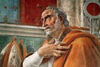
"It is our duty to adore the Blessed Sacrament. No one receives the Blessed Sacrament unless he adores it...and not only do we not sin by adoring, we do sin by not adoring."
(406 - 450)
Doctor of the Church
He is The Bread sown in the virgin, leavened in the Flesh, molded in His Passion, baked in the furnace of the Sepulchre, placed in the Churches, and set upon the Altars, which daily supplies Heavenly Food to the faithful.
(315 - 367)
Doctor of the Church
"I adore and venerate you as much as ever I can, though my love is so cold, my devotion so poor. Thank you for the good gift of this your holy Body and Blood..."
(329 - 389)
Doctor of the Church
"Let us remain in adoration and to Him, who, in order to save us, humbled Himself to such a degree of poverty as to receive our body, let us offer not only incense, gold and myrrh, the first as God, the second as king, and the third as one who sought death for our sake, but also spiritual gifts more sublime than those which can be seen with the eyes."
(951 - 1027)
Founder of Camaldolese Order
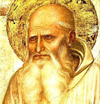
"Realize above all that you are in God's presence. Empty yourself completely and sit waiting, content with the grace of God, like a chick that tastes nothing and eats nothing except what its mother gives it."